⚓ Above the Guns, Within the Memory: Why HMS Belfast Is Worth Boarding in Person
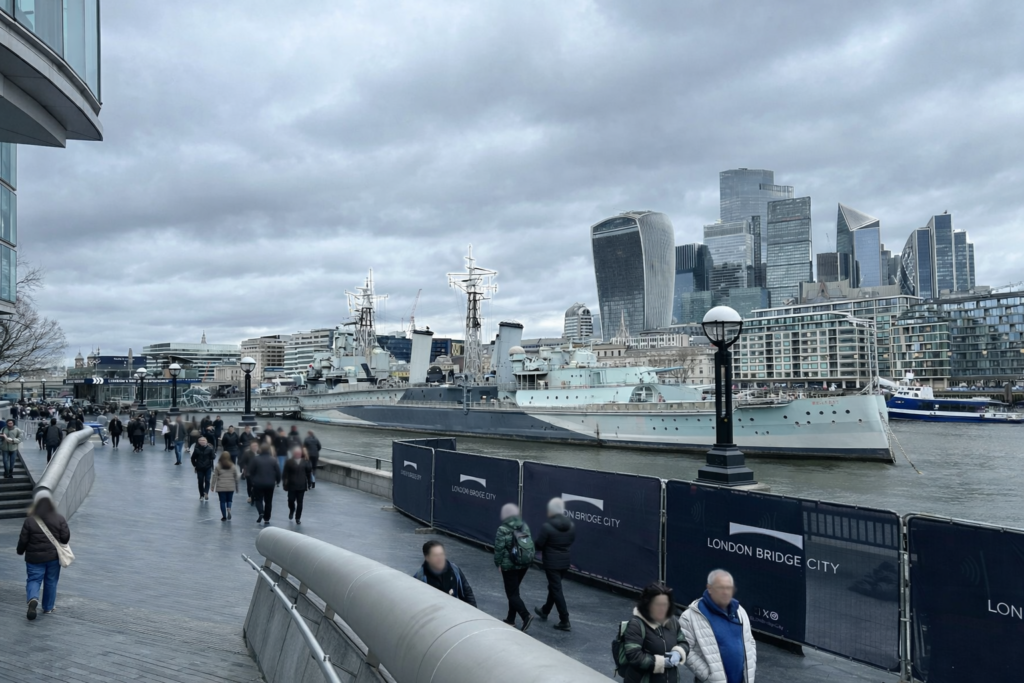
Beside Tower Bridge in London lies a warship that truly saw combat. She is not a replica, not a prop, but a steel vessel that emerged from the storms of the North Sea and the gunfire of the Korean War. HMS Belfast rests quietly on the Thames, yet the moment you step onto her deck, you realise this is no ordinary attraction, but a chapter of history you can physically enter.
Launched in 1938, this light cruiser took part in Arctic convoys, helped sink the German battleship Scharnhorst, and opened fire on the French coast during the D-Day landings in 1944. After the Second World War, she sailed to Asia and carried out bombardment missions during the Korean War. These are not just a few lines on an information board. They are gun turrets you can touch, a bridge and engine room you can see with your own eyes. Standing beside the great guns on the forward deck, looking out at the glass façades and skyline of modern London, you may suddenly sense that today’s prosperity and calm were once secured at the cost of steel and lives.
A recent news report has added a layer of warmth to this warship. The BBC told of a Hong Kong family who, while visiting the ship, unexpectedly found their grandfather’s name in the crew records, confirming that he had served on board during the Korean War. For that family, the visit was not merely an exhibition but a reunion with their own history. HMS Belfast is not only a symbol of Britain’s military past. It is also connected to Hong Kong, to the Far East, and to many Chinese who served under the structures of the Empire. As you walk through the narrow passageways below deck, you may find yourself thinking of your own elders and the stories they never fully told.
HMS Belfast is managed by the Imperial War Museums and forms part of its wider network. IWM members can enter free of charge. For non members, tickets cost about £26 for adults and around £13 for children aged five to fifteen, with free entry for those under five. Admission includes access to multiple decks and interactive exhibition areas. By London standards, it is a substantial and distinctive experience.
It is worth noting that this is a real warship converted into a museum. The corridors are narrow and the stairs steep. It may not be suitable for everyone, particularly those with limited mobility or sensitivity to enclosed spaces. Yet that very constraint makes the experience authentic. You are not reading history in a flat gallery space. You are moving through steel and rivets, sensing the living and fighting conditions of sailors decades ago. That level of immersion is rare in conventional museums.
London does not lack attractions. Yet places that invite quiet reflection are fewer than one might think. Next time you walk past Tower Bridge, consider setting aside half a day to come aboard. Stand on the deck with the river wind in your face, look at the city as it is today, and reflect on the gunfire and distant voyages that once shaped it. The visit may carry more weight than you expect.
⚓ Above the Guns, Within the Memory: Why HMS Belfast Is Worth Boarding in Person Read More »